History of Rock
Prog Rock and Metal
Prog Rock and Metal – 1970s
- Legacy of Psychedelic Rock
- Albums instead of singles
- Lyrical expansion
- Studio techniques and exploration
- Theatrical live shows
- Conceptual art
Prog Rock and Metal – 1970s
- Blues and folk fuse with psych rock in the UK
- Early London/Canterbury/Kent psych rock bands laid the groundwork for progressive rock
- Overall sound becomes much heavier leading into metal, heavy metal, etc.
- Progressive Rock = long form compositions, complex harmonic and rhythmic structures, and incorporation of several styles notably jazz, folk, and classical
- Metal = hard rock and blues styles, aggressive vocals and distorted/overdriven guitars, heavy bass and drums
Prog Rock and Metal – 1970s
- Progressive Rock = long form compositions, complex harmonic and rhythmic structures, and incorporation of several styles notably jazz, folk, and classical
- Metal = hard rock and blues styles, aggressive vocals and distorted/overdriven guitars, heavy bass and drums
Prog Rock and Metal – 1970s
- Led Zeppelin
- Formed in 1968
- Robert Plant, Jimmy Page, John Bonham, and John Paul Jones
- Album based hard rock
- One of the best-selling groups of all time
- Eight records
- As influential in the 1970s as The Beatles in the 1960s
- Basis for hard rock and metal
- Disbanded in 1980 after the death of John Bonham
Led Zeppelin – Whole Lotta Love (1969)
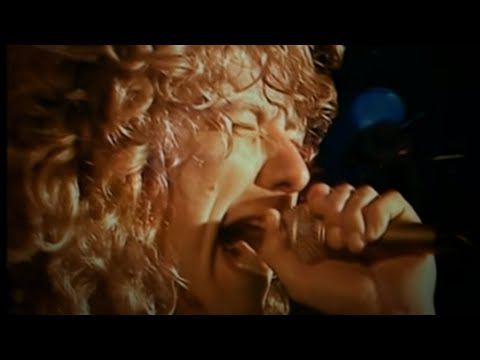
Led Zeppelin – Whole Lotta Love (1969)
Listening Guide
Led Zeppelin, "Whole Lotta Love" Atlantic 2690
Words and music by Jimmy Page, Robert Plant, John Paul Jones, John Bonham, and Willie Dixon; produced by Jimmy Page. Released as a single that rose to #4 on the Billboard "Hot 100" chart in late 1969.
FORM: Compound AABA. The A sections follow simple verse-chorus form, with verse and chorus based on the same musical material. An extended central section forms the B section, leading to a return of the A section and a coda, which begins with a vocal "cadenza" in free time before the riff kicks back in and the song fades out.
TIME SIGNATURE: 4/4.
INSTRUMENTATION: Electric guitars, bass, drums, lead and backup vocals.
| Timings | Section | Description |
|---|---|---|
| 0:00–0:11 | Introduction, 4 mm. | Begins with guitar alone, playing 2-bar blues-derived riff. Bass joins for the second time through this riff. |
| 0:11–0:35 | Verse 1, 9 mm. | Lead vocal enters, riff continues in guitar and bass. "You need coolin'…" |
| 0:35–0:47 | Chorus, 4 mm. | Drums enter, as backup vocals provide vocal hook. Note sliding guitar effect in call-and-response to vocal. "Got a whole lotta love…" |
| 0:47–1:10 | Verse 2, 9 mm. | As before, except that drums now continue from previous section. "You been learnin'…" |
| 1:10–1:21 | Chorus, 4 mm. | As before, but the fourth bar of the chorus serves as the first bar of the central section that follows. |
| 1:21–3:22 | Central section, 45 mm. | 39 bars of spacey psychedelia. Drums keep a light beat, as guitar sounds and vocal wails move from side to side, amid avant-garde sound effects. An aggressive 6-bar guitar break concludes this section. |
| 3:22–3:50 | Verse 3, 11 mm. | As in verse 2, but extended by 2 bars at the end. "You've been coolin'…" |
| 3:50–4:00 | Chorus, 4 mm. | As before. "Got a whole lotta love…" |
| 4:00–5:30 | Coda, 24 mm. | Vocal "cadenza" in free time begins this final section, and then the song's riff returns as Plant improvises vocally and the song fades out. |
Prog Rock and Metal – 1970s
- Black Sabbath
- Tony Iommi, Geezer Butler, Bill Ward and Ozzy Osbourne
- Began as a blues band in the late 1960s before turning to darker elements of rock
- Debut self-titled album met to great critical acclaim, blending long-form instrumentals and rippin' metal jams
- Central to the formation of heavy metal before Ozzy splitting from the group in 1979
Black Sabbath – Paranoid (1970)
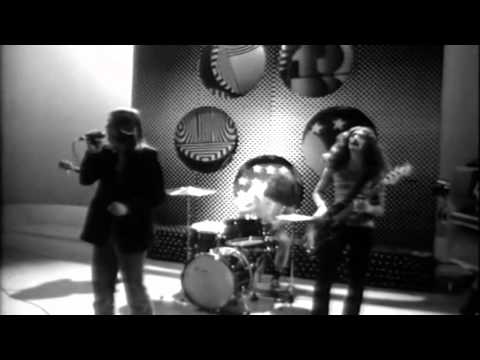
Black Sabbath – Orchid (1971)

Prog Rock and Metal – 1970s
- Black Sabbath
- Black Sabbath – 1970
- Paranoid – 1970
- Master of Reality – 1971
- Vol. 4 – 1972
- Sabbath Bloody Sabbath – 1973
- Helped usher in heavy metal by the middle of the 1970s
Prog Rock and Metal – 1970s
- Growing presence of rock and roll and recognition of artists throughout the United States
- Southern Rock and Texas
- Allman Brothers
- Lynyrd Skynyrd
- Charlie Daniels
- ZZ Top
Prog Rock and Metal – 1970s
- Psych rock bands from the London scene started to become more musically complex and conceptual
- Pink Floyd the most popular of the movement with highly conceptual albums and musical developments
- Steve Howe of Tomorrow joins Yes
- Genesis, Rush, Emerson, Lake, and Palmer, among many others
- The Who – Prog?
Pink Floyd – Wish You Were Here (1975)

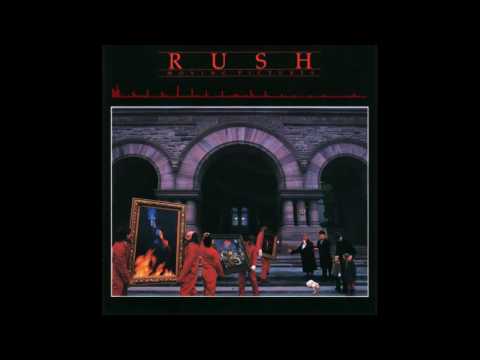
Rush – Tom Sawyer (1981)
Queen at Live Aid (1985)

Reading
- Read Chapter 9 – Black Pop, Reggae, and the Rise of Disco